How to Prepare for a Successful Wedding Dress Appointment
The Appointment That Goes Sideways Before It Begins
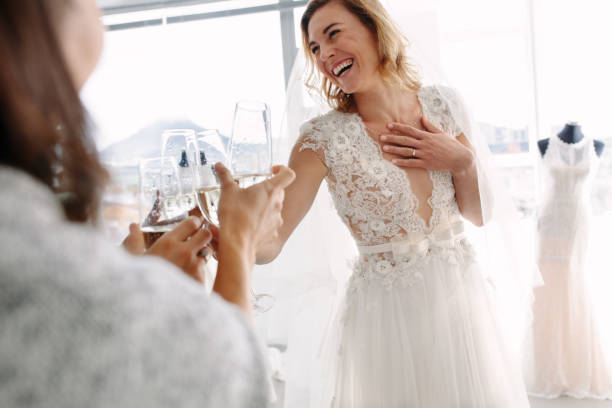
A bride walks into her first dress appointment with eight people in tow. Her mother, future mother-in-law, three bridesmaids, a cousin, and two friends — all with opinions, all with different taste, all with the best intentions. The stylist pulls fifteen gowns. Everyone reacts differently to everything. One person loves the ballgown. Two think the A-line is more "her." The future mother-in-law keeps requesting something with sleeves. By the end of the two-hour appointment, the bride leaves more confused than when she arrived, having tried on a dozen dresses without any real clarity about what she's looking for or what actually felt right on her body.
This happens constantly. Not because anyone involved did something wrong, exactly — but because the appointment wasn't prepared for. Bridal appointments don't seem to be informal purchasing trips. They're structured, time-limited consultations, and the brides who stroll in understanding what they want from the journey persistently come out ahead. Whether reserving at a bridal boutique las vegas or somewhere else, training isn't always non-compulsory if the intention is a productive, centered appointment that ends with true momentum towards a decision.
Know the Difference Between Inspiration and Information
Pinterest boards are fine. Saved Instagram posts are fine. But there's a specific trap that catches a lot of brides in the early stages — confusing visual inspiration with useful information about what actually suits them.
A strapless Vera Wang gown shot in golden hour light on a model who's 5'10" with narrow hips looks transcendent in a photo. That same silhouette on a different body type, under fluorescent fitting room lighting, with a sample two sizes too large and pinned in the back — different experience entirely. This isn't pessimism. It's just the reality of how bridal samples work and how photography works.
The more useful exercise before an appointment is to look at inspiration images and ask: what specifically is appealing here? The neckline? The fabric movement? The way the back is structured? The overall silhouette, or just how confident the person wearing it looks? Pulling out those specifics gives a stylist something to actually work with. "I love this photo" is a starting point. "I love the low back and the way the skirt has weight without being a full ballgown" is a brief.

The Guest List Question Nobody Wants to Have
Two people. That's the number most experienced bridal stylists would quietly recommend for a first appointment, and often it's the hardest conversation a bride has to have in the entire planning process.
It's not about keeping people out of a special moment. It's about protecting the bride's ability to actually hear herself think. Every additional person in a fitting room is another voice, another reaction, another energy to manage. The bride ends up watching other people's faces instead of checking in with how she actually feels. And feelings are the whole point of this appointment — not consensus, not committee approval.
The people worth bringing are whoever can give honest, calm feedback without projecting their own preferences onto the decision. That's a very specific kind of support. Not everyone in the inner circle qualifies, even if they love the bride deeply. Two people who genuinely understand the assignment are worth more than eight who mean well.
Budget: Have the Actual Number Ready
Stylists ask about budget because it determines which dresses get pulled. Not because the boutique is trying to steer anyone toward a particular price point, but because trying on a gown at three times the actual budget and falling in love with it is a specific kind of misery that's completely avoidable.
The mistake people make here is giving a range that's aspirational rather than realistic — quoting the top of what would technically be possible on a credit card rather than what makes actual financial sense given everything else a wedding costs. A dress is one line item. Alterations, accessories, preservation, and often a veil or underpinnings are separate costs that get forgotten until they arrive. A $2,000 dress with $600 in alterations and $300 in accessories is a $2,900 dress. Worth knowing that going in.
Being honest with the stylist about budget isn't embarrassing. It's efficient. They'll work within it, and more often than not, the best option ends up being something the bride wouldn't have pulled herself.
What to Actually Wear to the Appointment
Nude or skin-toned undergarments. Strapless bra if possible, or at least a convertible one. Hair up or easily adjustable, so necklines and backs can be assessed properly. Minimal jewelry — a stud or small hoop at most — because the stylist may bring pieces to try with certain gowns.
Skip the heavy make-up if possible. Not due to the fact it things cosmetically, however due to the fact pulling robes over a full face of make-up is surely demanding for each the bride and the sample, and that stress is ambient in a way that subtly impacts the experience.
Shoes count extra than most human beings think. Even a difficult estimate of heel peak modifications how a robe sits and moves. A floor-length costume worn with naked ft in a becoming room appears definitely specific from the identical gown worn with a three-inch heel. Bring some thing shut to the supposed wedding ceremony shoe, or at minimum, inform the stylist the approximate height.
Letting the Stylist Actually Do Their Job
This might be the most practically useful point, and the one most often ignored. Bridal stylists who have been in this industry for any length of time have seen thousands of brides try on thousands of dresses. They know things — about how different silhouettes behave, which designers run small, which fabrics require more lead time for custom orders, which necklines photograph well — that no amount of Pinterest research replicates.
Shops like Perla Bridal Las Vegas work with brides specifically because the expertise at a dedicated bridal boutique is different from a department store or a sample sale. The relationship between bride and stylist works best when the bride comes in with clear information and an open mind, rather than a fixed idea that everything must confirm.
Sometimes the dress the stylist suggests based on a thirty-second conversation turns out to be the one. Stranger things happen in fitting rooms all the time.

After the Appointment: What to Do With the Feeling
Don't make the decision in the room if it doesn't feel right to do so. That pressure — from the environment, from the people present, from the stylist's genuine enthusiasm — is real, and it's worth recognizing it for what it is. A reputable boutique will give the space needed to think.
At the same time, don't let the feeling of the right dress evaporate by overthinking it after the fact. There's a difference between productive reflection and talking yourself out of a genuine reaction because of someone else's opinion or a number on a price tag.
Preparation makes the appointment better. But the actual goal is finding a dress that feels like the answer. That part can't be researched. It just happens — usually when the bride has cleared enough of the noise to actually notice it.


Comments
Post a Comment